
 BCCSA Search
 Health & Safety Programs
COR® is an occupational safety and health accreditation program that verifies a fully implemented safety and health management system which meets national standards.
The National Construction Safety Officer (NCSO®) and National Health & Safety Administrator (NHSA™) designations offer proof of competency in construction safety at a nationally-recognized level.
The BCCSA's Traffic Control Person (TCP) Program is British Columbia's most established training program for traffic control. We train numerous TCPs across the province.
Individuals who hold the Certified Concrete Pump Operator Certification (CCPO) have proven their ability to effectively apply their knowledge while working in the field.
The government of British Columbia has introduced new asbestos worker certification regulations to enhance safety. Employers are obligated to secure licenses.
The Fire & Flood Restoration Program (FFRP) is an initiative aimed at enhancing safety within the restoration industry through safety training modules and valuable resources.
The Technical High Angle Rope Rescue Program (THARRP) prepares fire department personnel in technical rope rescue techniques, specifically for rescuing workers in distress at elevated heights.
The BCCSA's Peer Support Recovery Navigator (PSRN) Program helps employers and workers build safer, recovery-inclusive workplaces in the BC construction industry.
Health & Safety Training
All instructor-led, self-paced, classroom, and online training offered by the BCCSA.

Find and register for upcoming BCCSA training available throughout the province, in sortable list view.

Find and register for upcoming BCCSA training in month-to-month calendar view.
The Student Audit Assignment is required to attain BCCSA's COR® Internal Auditor certification. Microsoft Excel is required.
Learn the roles and responsibilities of prime contractors in BC construction, including legal requirements, multi-employer coordination, and practical safety management.
Learn about 11 common hazardous materials, their health risks, and safe practices for handling, removal, and disposal. Free for BC fire and flood restoration workers.
Learn how mental health affects the workplace, reduce stigma, and explore practical ways to support your own well-being and your team.
Our PHSM eLearning course is designed to provide clear guidance and practical instruction for creating a concise and effective Health & Safety manual. This manual not only ensures compliance with regulations but also prioritizes the well-being of your workers.
SiteReadyBC is the first comprehensive construction site safety orientation program created specifically for British Columbia. It equips workers with essential knowledge to comprehend safety regulations on any construction site in the province and empowers them to work confidently.
Our DEV eLearning course serves as a comprehensive guide on the safe utilization of dust extractor vacuums for managing exposure to respirable crystalline silica in construction settings.
Our Webinar Series is designed to offer in-depth insights, expert guidance, and practical solutions on a broad range of OHS topics. We delve into the critical aspects of maintaining a safe and secure workplace.
Health & Safety Resources
The Silica Control Tool® assists employers in performing thorough risk assessments and implementing effective controls and safe work practices in situations where silica dust poses a potential occupational hazard.
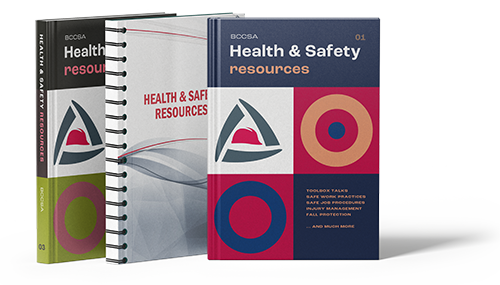
Discover our library of occupational health & safety resources, including documents, materials, files, and links. Our resources are designed to support you in promoting workplace health & safety and mitigating occupational hazards effectively.
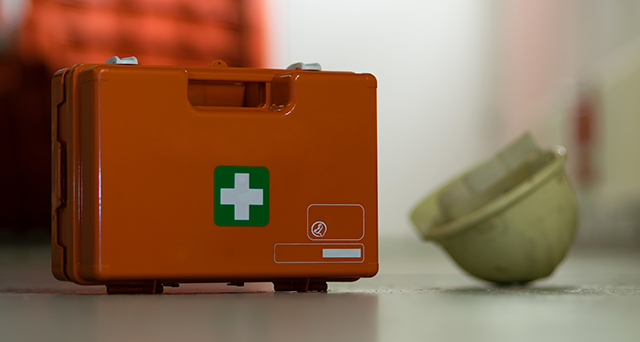
Every employer in B.C. needs to prepare a written first aid assessment for each of their workplaces. This app is designed to help construction employers to determine the first aid equipment, supplies, and facilities required at each of your workplaces.

The Hazard Guide provides straightforward, current safety strategies to prevent accidents and keep workers healthy.
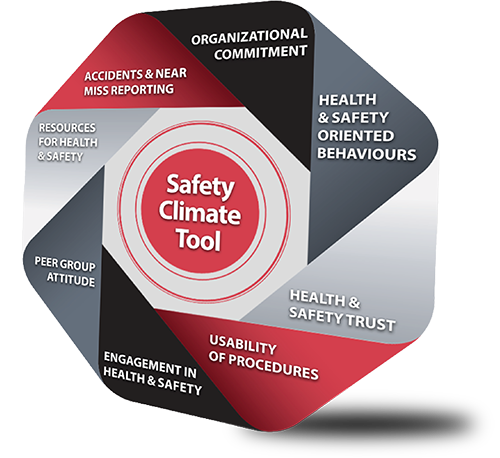
Measure your workplace safety culture with a quick, anonymous 10–15 minute survey and get practical insights to improve safety across your organization.

Mental health, substance use & wellness support for BC construction workers.

RE-MIND is dedicated to enhancing BC construction workers' access to mental health information and support services. RE-MIND encompasses the content available on the RE-MIND website, as well as The Lone Hunter video and Toolbox Talk resources.
Find answers to our most frequently asked questions. If you need more help, we're here to assist.
Health & Safety Services
Get free, hands-on safety support from experienced Regional Safety Advisors, including help with WorkSafeBC requirements, safety programs, and COR® certification.

Employing a state-of-the-art tour trailer, Safety on Tour offers safety demonstrations at construction sites, schools, trade shows, and community events in every corner of the province.

Get practical support to help injured workers return to meaningful work sooner while managing injury-related costs.

The BCCSA serves on committees that examine select matters involving occupational health & safety in BC.
Health & Safety StoreOHS handbooks, guides, manuals, and other materials for your workplace.
Designed specifically for construction supervisors to keep a daily record of on-site safety activities, site orientations, and daily crew notes.
Register and join safety events, info sessions, and regional breakfasts across BC.
The annual BC Construction Health & Safety Conference is designed to bring together professionals, experts, practitioners, and stakeholders from the construction industry to discuss and share insights, best practices, and innovations related to construction health and safety.
Register for PHSM
To begin the certification process, go to the Safety Training Portal. You will need to create a BCCSA account. If you have already created a BCCSA website account or taken BCCSA training, such as SiteReadyBC, you can use your existing credentials to log in. You can create a free account in just a couple of minutes. For instructions on creating an account, click here.
This self-paced, online course is designed to provide guidance and instruction about developing a simple yet robust Health & Safety Manual. PHSM also introduces participants to the BCCSA COR® standard, and some of its requirements. The course material is geared to the construction industry, and offers sample policies, forms and checklists that can be tailored into a cost-effective company Health & Safety manual and aims to help employers build a solid foundation for developing Safety Programs and a Safety Management System. PHSM is a pre-requisite for the COR® Internal Auditor Course.
Any new or expired BCCSA auditor is required to complete this course upon entering the COR® Internal Auditor Program.
For Frequently Asked Questions click here (PDF)
The course reviews the elements of a safety program as they pertain to the development of a COR® audit standard:
Upon completing PHSM, the participant should be able to:
AUTOMATIC CERTIFICATE UPON COMPLETION. Students must score at least 80% on the PHSM quiz to receive certification. Certificates will be sent via e-mail automatically upon completion of the course exam.
Please note that your PHSM certificate does not expire.
Register for PHSM
To begin the certification process, go to the Safety Training Portal. You will need to create a BCCSA account. If you have already created a BCCSA website account or taken BCCSA training, such as SiteReadyBC, you can use your existing credentials to log in. You can create a free account in just a couple of minutes. For instructions on creating an account, click here.
BCCSA Training
BCCSA Training
Earning CPD points each year is a mandatory part of renewing a BC Housing Residential Builder Licence. A Residential Builder Licence term is 1-year, and BC Housing requires that CPD points be earned each year to maintain and renew standing. The BCCSA is a pre-approved education provider for general contractors to earn CPD points while acquiring occupational health & safety knowledge and skills.
For more information, see BC Housing's Continuing Professional Development (CPD) page.
BCCSA Training
If your employer is registered with WorkSafeBC in the Construction Sector under the following Classification Units (CU); you are eligible for No-Cost on some of BCCSA's courses.
No-Cost Eligible Courses:
Principles of Health & Safety Management (PHSM)
COR® Internal Auditor
Leadership for Safety Excellence (LSE®)
Principles of Injury Management (PIM)
Train the Safety Trainer
To find BCCSA No-Cost and At-Cost courses, please see our Training Catalogue.
BCCSA Training
The BCCSA offers training in the following formats:
BCCSA training may be delivered in one or more of the above formats.
BCCSA Training
To transfer or cancel a registration, you must send a written confirmation to training@bccsa.ca If written notification is not received within the stated time frame, the full course fee will be charged.
The BCCSA and its venue partners reserve the right to cancel any courses due to insufficient enrollment or other causes. In this case, you will be notified by the BCCSA through phone call or email at least 5 business days prior to the course.
BCCSA Services
BCCSA Services
Please enter your e-mail address below. A password reset code will be e-mailed to you, which you'll use when creating a new password for your account.